
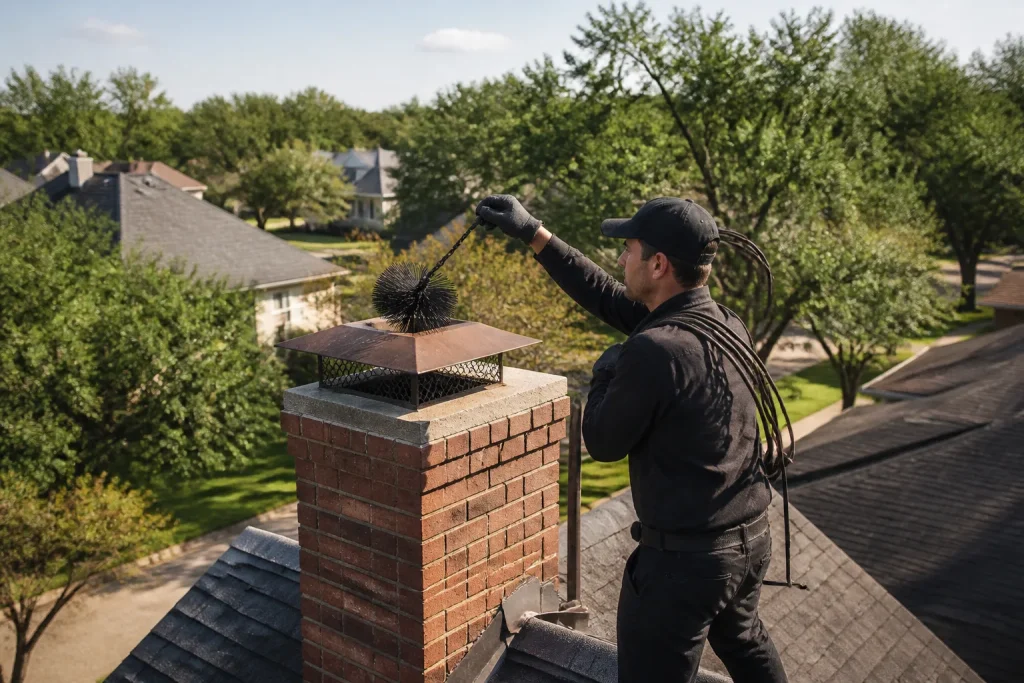
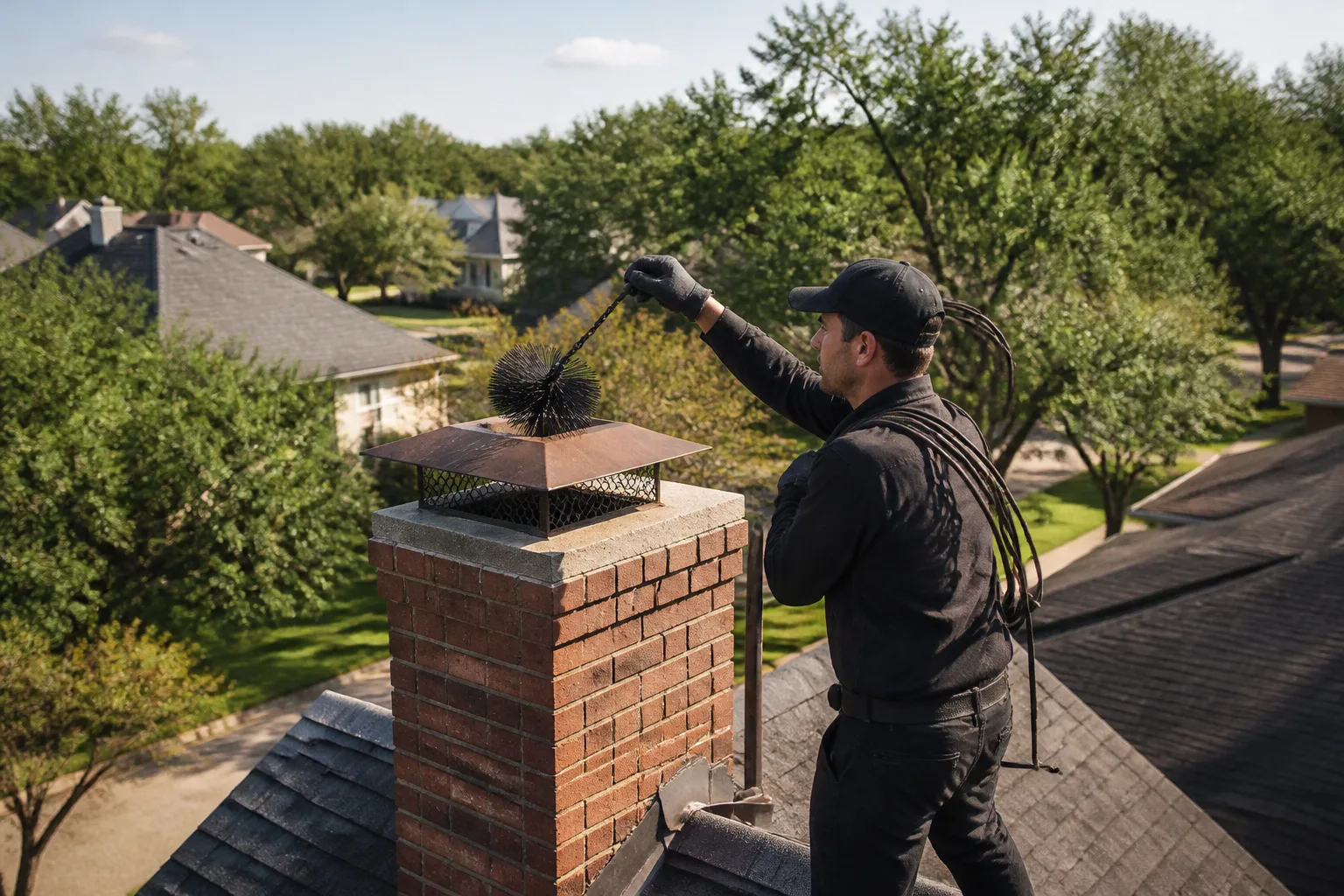
Chimney Sweep: Repair or Replace? How Meyerland Homeowners Decide
There’s no single answer that fits every chimney. A cracked clay flue tile can be patched, resurfaced with a liner system, or treated as the reason to tear out and rebuild the whole thing, and a motivated salesperson can build a convincing case for any of those paths. What actually decides it is which component failed, how far the damage runs, and whether the surrounding structure can hold a repair that lasts. Here’s how to sort that out yourself, one part at a time.
If you’d rather have a specialist walk your system and show you what’s wrong on camera, call (833) 696-2226. We answer 24/7. Fast dispatch from 7am to 7pm, Sunday through Friday.
Why “Repair or Replace” Is the Wrong Question
A chimney isn’t one object. It’s a stack of separate components that wear on different schedules: the firebox brick, the damper, the flue liner, the crown, and the cap all fail in their own way and each one has its own repair-or-replace threshold. Treating the whole chimney as a single yes-or-no decision is where homeowners in Meyerland get talked into work they don’t need, or talked out of work they do.
The better approach is to ask about each part separately. A firebox with a few cracked bricks is a repointing job. A liner with a hairline fissure in one section is a resurfacing candidate. A crown that’s been funneling rainwater into the smoke chamber for several seasons is a different conversation entirely, because the water has had time to reach parts you can’t see from the firebox.
In our experience, the honest answer is usually “repair this, watch that, and replace the third thing when it actually fails.” A specialist who works on chimneys all day will tell you which is which. A generalist who sweeps on the side often won’t, because the full system isn’t their trade.
Component by Component: Where the Line Falls
Here’s the framework we use. Each component has a point past which patching stops making sense. Meyerland’s mild winters mean we’re not fighting freeze-thaw the way northern guides describe, but the humidity and the occasional flood event do their own kind of damage, and that shows up differently in the brick and mortar.
- Firebox brick: Isolated cracks and loose mortar joints can be repointed. Once a crack runs through the brick itself, or the firebox floor has dropped, the firebox needs rebuilding. Repair is worth it when the surrounding brick is sound; replace when the failure is structural.
- Damper: A damper that sticks or won’t seal is almost always a repair or a top-sealing replacement. This is rarely a “replace the whole chimney” situation.
- Flue liner: This is where the real money and the real decision live. A localized crack can sometimes be restored with HeatShield resurfacing. Damage that runs the full length of the flue, or tile that’s separated and shifted, points to a full liner replacement with a system like DuraFlex.
- Crown: A hairline crack gets sealed. A crown that’s pulled away from the flue, crumbled, or let water in for multiple seasons needs to come off and be rebuilt, because by then the damage has moved into the smoke chamber.
- Cap: A missing or damaged cap is a straightforward replacement, and it’s the cheapest insurance against everything above. Gelco and Famco caps do the moisture and draft work here.
The point of splitting it up is that you can say yes to a cap and a crown and no to a liner, and that’s a perfectly reasonable outcome.
The Meyerland Aging Issue Most Guides Miss
Homes built in Meyerland between the 1960s and the 1980s were commonly fitted with clay tile liners sized for wood fires. Many of those same chimneys now vent gas appliances, and that changes the wear pattern. Gas exhaust carries more moisture and less of the heat that used to dry the flue out between burns. Over years, that moisture works on the mortar joints between tiles, and the tiles themselves can crack from the inside.
National guides written for wood-burning chimneys in cold climates don’t describe this well. They talk about creosote and freeze-thaw. In Meyerland, the more common pattern we see in older homes is deteriorated mortar between clay tiles and water intrusion that started at the crown and worked its way down. That matters for your decision because it means the question isn’t just “is the liner cracked?” but “how did it crack, and what’s behind the tile?”
This is also why an inspection should be its own service, not a sweep with a sales pitch attached. A chimney sweep tells you it’s clean. An inspection tells you it’s safe, and those are different jobs.
Indicators That Repair Won’t Hold
Some damage is past the point where a patch makes sense, and it’s worth knowing the signs before anyone climbs on your roof. When you see these, the conversation should shift toward replacement, not another repair.
- Full-length liner damage. If cracks or gaps run the entire height of the flue, a spot repair at the top or bottom won’t fix what’s happening in the middle.
- Spalling brick. Brick faces flaking off, or brick that’s gone soft and crumbly, means the masonry itself is failing. Water intrusion from above or long-term moisture is usually the cause in this climate, and repointing won’t stop it once it’s widespread.
- Crown failure that’s gone on for seasons. A crown that’s been leaking for multiple seasons has likely pushed water into the smoke chamber. At that point, the repair scope is bigger than the crown alone.
- Shifting or separated tiles. When clay tiles have physically moved or come apart at the joints, resurfacing may not bridge the gap reliably.
If you’re seeing any of these and want a straight assessment, a proper chimney cap & crown evaluation is often the right first step, since so much downstream damage starts at the top.
The Warranty Gap That Shifts the Math
This is the piece homeowners rarely get told. A patch repair, whether it’s sealing a cracked crown or spot-treating a liner joint, typically carries a much narrower warranty than a full component replacement. That gap matters more than the upfront price difference in a lot of cases.
A full liner replacement with a product like DuraFlex or Olympia Chimney is a new system with a manufacturer’s warranty behind it. A HeatShield resurfacing job is a restoration of the existing flue, and it carries its own guarantee terms. A hand-patched crack in a clay tile? Often no meaningful warranty at all. When you run the numbers over the service life of each option, a repair that might need redoing in a few years can cost more than a replacement that lasts decades. We’re not saying always replace. We’re saying compare the warranty terms side by side before you decide, because a patch with no coverage isn’t the bargain it looks like.
How to Pressure-Test Any Recommendation
You don’t have to take a technician’s word for it, and you shouldn’t. There’s a simple question that separates a specialist from a salesperson, and it works on any roof in Meyerland: “What failure mode is this repair preventing, and what’s the expected service life?”
A specialist can answer both directly. They’ll tell you the specific failure they’re addressing, how long the repair should hold, and what conditions would shorten that. A vague answer, or a pitch that jumps straight to the most expensive option without addressing those two points, tells you something.
Ask to see the camera footage too. A real inspection shows you the inside of the flue on a screen, not just a description. If a recommendation comes without visual evidence you can look at, get a second opinion before you spend anything.
When to call a pro: any time the firebox, flue, or crown is in question. These are fire-safety components, and the stakes are real: a failed liner can let heat and gases into the structure around it, and a blocked or damaged flue can push carbon monoxide back into the living space. If you’re not sure, have it inspected. If you need fireplace repair on top of chimney work, that’s the same visit.
The Bottom Line
Repair vs. replace isn’t one decision. It’s five: firebox, damper, liner, crown, cap. Each has its own threshold. Repair makes sense when the damage is localized and the surrounding structure is sound. Replacement makes sense when damage runs the full length of a component, when brick is spalling, or when the warranty gap tips the long-term math. In Meyerland’s older homes, the liner question is usually the big one, and the answer depends on how the tile cracked and what’s behind it.
If you’re in Meyerland and want a straight assessment with camera evidence you can see for yourself, Chimney Sweep Meyerland offers free estimates. We handle the sweep, inspection, cap and crown, liner work, and fireplace repair as one company, using brands like HeatShield, Gelco, and Olympia Chimney. Call (833) 696-2226. We answer 24/7. Fast dispatch from 7am to 7pm, Sunday through Friday.
Written by the team at Chimney Sweep Meyerland.
Frequently Asked Questions
It depends on which component failed. A localized crack in the crown or a small liner fissure is usually a repair. Damage that runs the full length of the flue, spalling brick, or a crown that’s leaked for multiple seasons usually means replacement of that component. Have it inspected with a camera so you can see the evidence yourself, then decide component by component.
Sometimes. A HeatShield resurfacing can restore a liner with isolated cracks or a rough interior. If the tiles have shifted or separated, or the cracks run the full height of the flue, a full replacement with a flex liner system like DuraFlex is the more reliable path. The inspection findings decide which applies to your chimney.
Most older chimneys are worth repairing, but not all of them, and not all at once. Homes from the 1960s through the 1980s often have clay liners now venting gas appliances, which wears differently than wood. If the liner is failing throughout, replacement is usually the right call. If the crown and cap are the weak points, fixing those first can prevent the liner damage that would otherwise follow.
Ask what failure the repair prevents and what the expected service life is. Ask to see the camera footage. Ask what warranty covers the work and for how long. A specialist can answer all four without hesitation. If a recommendation comes without visual evidence or a clear answer on warranty, get a second opinion before you commit.
Need Chimney Cleaning Help?
Call Chimney Sweep Meyerland - the local pro we connect you with is licensed and insured, with free written estimates in Meyerland.
(833) 696-2226